

August 7, 2026
Many people get stopped at the Canada border with no warning. They learn they are inadmissible to Canada for reasons they didn’t expect. It could be an old conviction, a health issue, or something else entirely. This can feel confusing and stressful, especially when travel plans are already in place. The good news is that most cases have a clear path forward.
Table of Contents
ToggleKey Takeaways: Inadmissible to Canada
Main reasons: Criminal convictions, security concerns, and medical conditions are the top grounds that make someone inadmissible to Canada.
Other grounds: Misrepresentation, financial inadequacy, non-compliance with IRPA, and inadmissible family members can also trigger a finding.
Fix options: Criminal rehabilitation, deemed rehabilitation, a Temporary Resident Permit, or a mitigation plan can resolve most cases of being inadmissible to Canada.
Processing time: Criminal rehabilitation applications usually take several months to over a year, depending on the offence type and completeness of your file.
How to Find Out If You Are Inadmissible to Canada
There’s no single database to check if you’re inadmissible to Canada. The finding usually shows up in one of a few ways.
- At the border – A CBSA officer checks your ID and may run a records check.
- During an application – IRCC screens for crime, health and security issues.
- A Procedural Fairness Letter – Your first real sign that a problem is being reviewed.
If you have a past charge or health issue, get legal advice before you travel.
Canada Immigration Inadmissibility
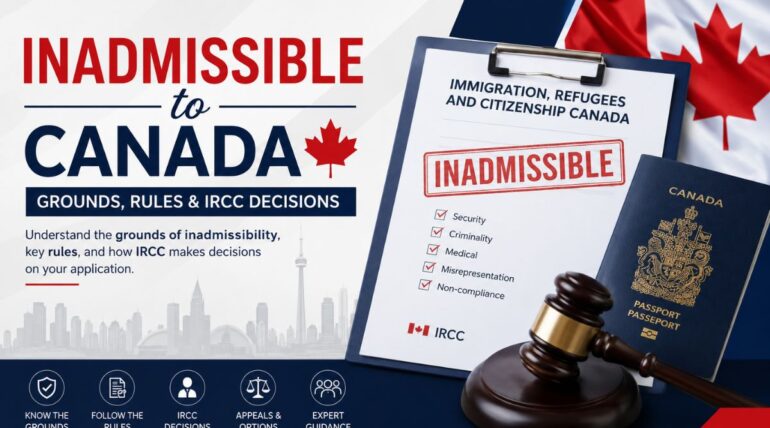
Canada immigration inadmissibility is governed primarily by sections 34 through 42 of IRPA, which set out roughly a dozen distinct grounds. Broadly, they fall into these categories:
- Security — espionage, subversion, or terrorism-related activity
- Human or international rights violations — war crimes, crimes against humanity, or senior positions in governments that committed such acts
- Criminality and serious criminality — convictions or acts that would be crimes under Canadian law
- Organized criminality — membership in or association with criminal organizations, including smuggling and trafficking
- Health grounds — conditions that pose a danger to public health, danger to public safety, or excessive demand on health and social services
- Financial reasons — inability to support yourself or dependents
- Misrepresentation — providing false information or withholding material facts on an application
- Non-compliance with IRPA — failing to meet the basic requirements of the Act
- Inadmissible family member — a family member’s inadmissibility can, in some cases, extend to the applicant
Security Inadmissibility Canada
Security inadmissibility Canada cases are the most serious and hardest to fix. Under section 34 of IRPA, this applies to people who:
- Engage in espionage against Canada
- Try to overthrow a government by force
- Engage in or support terrorism
- Pose a danger to Canada’s security
- Belong to a group tied to these acts
You don’t need a criminal charge for this to apply. Officers only need reasonable grounds to believe it happened. There’s also no appeal for most security-related removal orders. If this ground applies to you, get legal help early and consider judicial review as your main option.
What Crimes Are Inadmissible to Canada
A criminal record is the top reason people become inadmissible to Canada. IRPA splits crimes into two tiers. Serious criminality means the offence carries ten or more years in prison under Canadian law. Ordinary criminality applies to lesser offences that are still indictable.
Common crimes that trigger this include:
- DUI or DWI, even a single conviction
- Assault, including domestic assault
- Theft and fraud
- Drug possession or trafficking
- Firearms offences
- Dangerous driving causing harm
Many Americans don’t realize a child neglect charge can block them from Canada. Even a misdemeanor back home can count. Canada looks at the closest match in its own laws, not how the US labeled it.
This surprises people because the US and Canada classify crimes differently. A minor US charge can still count as a serious offence here, especially if it involved harm or a weapon. If you have this on your record, get legal advice before crossing the border.
Criminal Rehabilitation Canada Application
A criminal rehabilitation Canada application can permanently clear your record for Canada. Once approved, it’s not a one-time pass. It fixes the issue for good.
Deemed rehabilitation happens on its own if:
- Ten years have passed since your sentence ended
- The offence isn’t serious criminality
- You have only one conviction
Formal rehabilitation needs an application when you don’t qualify for the automatic route:
- You’re eligible five years after your sentence ends
- Fees depend on how serious the offence is
- DUI convictions since 2018 always need this route, since they’re treated as serious
What Medical Conditions Are Inadmissible to Canada
Health issues can also make you inadmissible to Canada. After your medical exam, an officer checks for three things: risk to public health, risk to public safety, and excessive demand on health services. Public health risks usually mean untreated infectious diseases like TB. Public safety risks involve conditions that could cause sudden harm to others. Excessive demand means your care could cost the system too much.
This last ground doesn’t apply to everyone. Refugees and most sponsored family members are exempt. Economic applicants and parent sponsorships usually are not. If an officer flags a concern, you’ll get a letter and about three months to submit a mitigation plan. A strong response here can save your application.
Getting an IRCC Inadmissibility Decision Reversed or Managed
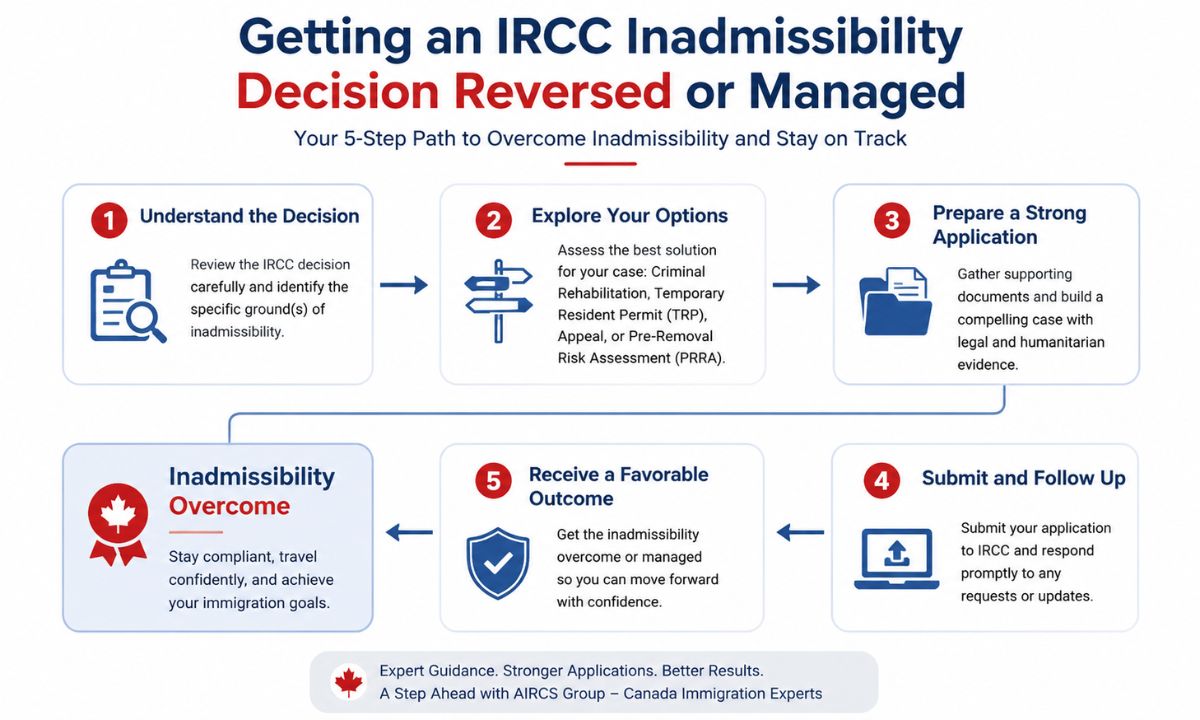
Your options after an IRCC inadmissibility decision depend on the ground involved.
- TRP – Lets you enter for a set time and purpose
- Criminal rehabilitation – A permanent fix for crime-related grounds
- Mitigation plan – Used for medical excessive-demand cases
- Judicial review – For security or rights-based findings with no appeal
- H&C consideration – Available in limited cases
Read your decision letter closely. It tells you exactly which IRPA section applies, and that decides which fix works for you.
Frequently Asked Questions
What does it mean to be inadmissible to Canada?
It means you’re not allowed to enter or stay in Canada. IRCC or a border officer makes this call based on specific legal grounds.
Can a DUI make me inadmissible to Canada?
Yes. Even one DUI conviction counts as serious criminality under Canadian law. This applies no matter how it was classified in your home country.
How long does inadmissibility last?
It depends on the reason. Some cases clear automatically after time passes. Others need a formal application to fix.
What is deemed rehabilitation?
It’s automatic clearance for old, minor convictions. You need ten years since your sentence ended, with no other serious offences.
Do I need a lawyer to apply for criminal rehabilitation?
No, but it helps. The process is detailed, and mistakes can lead to refusal or long delays.
Can a medical condition make me inadmissible?
Yes, in some cases. This usually happens if a condition could strain public health services or pose a safety risk.
What should I do if I get a Procedural Fairness Letter?
Respond carefully and on time. This letter is your chance to explain your case before a final decision is made.
Conclusion
Being inadmissible to Canada is not always the end of the road. Many people fix their status with the right application and some patience.
The key is knowing your exact ground for inadmissibility. Once you know that, you can find the right path forward and move ahead with confidence.
Book Your Free Immigration Consultation Today!
Want to build a better future for your family in Canada?
Get expert immigration guidance tailored solutions specifically for Pakistani families.
WhatsApp: +92 311 4464274
Website: https://aircs.pk/
Offices Rawalpindi & Faisalabad